
Expected the debut of the Dolphin emulator in Flatpak format for Linux, following the growing demand demand from users, and driven largely by the growing popularity of the Steam Deck device.
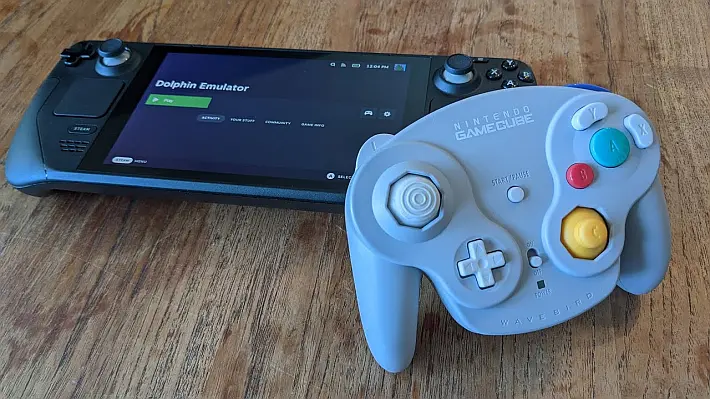
Thanks to Flatpak packages, users will be able to easily install emulators and other programs on Steam Deck with a single click, making the Dolphin emulator one of the most popular applications in this context.
To date, the Flatpak version of Dolphin has only been distributed in unofficial form, as the project development team had never created an official build for Linux.
In fact, in the last eight years, the Dolphin project has chosen not to deal directly with the builds for Linux, preferring to leave this task to the different distributions.
However, with the increase in the number of Linux users, especially thanks to Steam Deck, the team decided to respond to the growing demand for an official Flatpak version of the emulator.
Recently, one of the official developers of the Dolphin project started a dialogue with the team responsible for the unofficial version of Dolphin in Flatpak format.
The proposal was to turn the existing build into an official version, managed directly by the Dolphin Emulator team.
This change will consolidate the quality and security of future Dolphin versions for Steam Deck users and other Linux platforms.
During this dialogue, some key points emerged that the Dolphin team intends to discuss with the community and the developers involved:
Expected the debut of the Dolphin emulator in
Flatpak format for Linux, following the growing demand demand from
users, and driven largely by the growing popularity of the Steam Deck
device.
Thanks to Flatpak packages, users will be able to easily install
emulators and other programs on Steam Deck with a single click, making
the Dolphin emulator one of the most popular applications in this
context.
To date, the Flatpak version of Dolphin has only been distributed in unofficial form, as the project development team had never created an official build for Linux.
In fact, in the last eight years, the Dolphin project has chosen not
to deal directly with the builds for Linux, preferring to leave this
task to the different distributions.
However, with the increase in the number of Linux users, especially
thanks to Steam Deck, the team decided to respond to the growing demand
for an official Flatpak version of the emulator.
Recently, one of the official developers of the Dolphin project started a dialogue with the team responsible for the unofficial version of Dolphin in Flatpak format.
The proposal was to turn the existing build into an official version, managed directly by the Dolphin Emulator team.
This change will consolidate the quality and security of future Dolphin versions for Steam Deck users and other Linux platforms.
During this dialogue, some key points emerged that the Dolphin team
intends to discuss with the community and the developers involved:
Hosting the Repository Flatpak: Dolphin’s team
plans to host its own Flatpak repository, as well as using Flathub, the
main platform for deploying Flatpak applications. This will result in
the need to upstream some of the data currently present, such as the
file .yaml, to create your own builds. The possibility of additional pull requests to the upstream repository is also considered.
App ID verification: The application’s current ID
uses a non-existent domain, “dolphinemu.org,” while the Dolphin
project’s official domain is “dolphin-emu.org”. This discrepancy may
cause flathub verification issues. The team is considering changing the
app ID to align with the official domain.
Transfer of the App Control on Flathub: To ensure
adequate and centralized management, the control of the application on
Flathub should be transferred to an account managed by the official
Dolphin project team. There is a process for the transfer that the team
is ready to follow, in accordance with the group that currently manages
the unofficial build.
Creating Builds on Own Infrastructure: The Dolphin
team wants to explore the ability to build Flatpak packages on their
infrastructure and then load artifacts onto Flathub. This would allow
more control over the build and distribution pipeline to be maintained.
The idea is to create a single build that can be deployed on both your
own repository and Flathub.
Source: github.com
- App ID verification: The application’s current ID uses a non-existent domain, “dolphinemu.org,” while the Dolphin project’s official domain is “dolphin-emu.org”. This discrepancy may cause flathub verification issues. The team is considering changing the app ID to align with the official domain.
- Transfer of the App Control on Flathub: To ensure adequate and centralized management, the control of the application on Flathub should be transferred to an account managed by the official Dolphin project team. There is a process for the transfer that the team is ready to follow, in accordance with the group that currently manages the unofficial build.
- Creating Builds on Own Infrastructure: The Dolphin team wants to explore the ability to build Flatpak packages on their infrastructure and then load artifacts onto Flathub. This would allow more control over the build and distribution pipeline to be maintained. The idea is to create a single build that can be deployed on both your own repository and Flathub.
Source: github.com